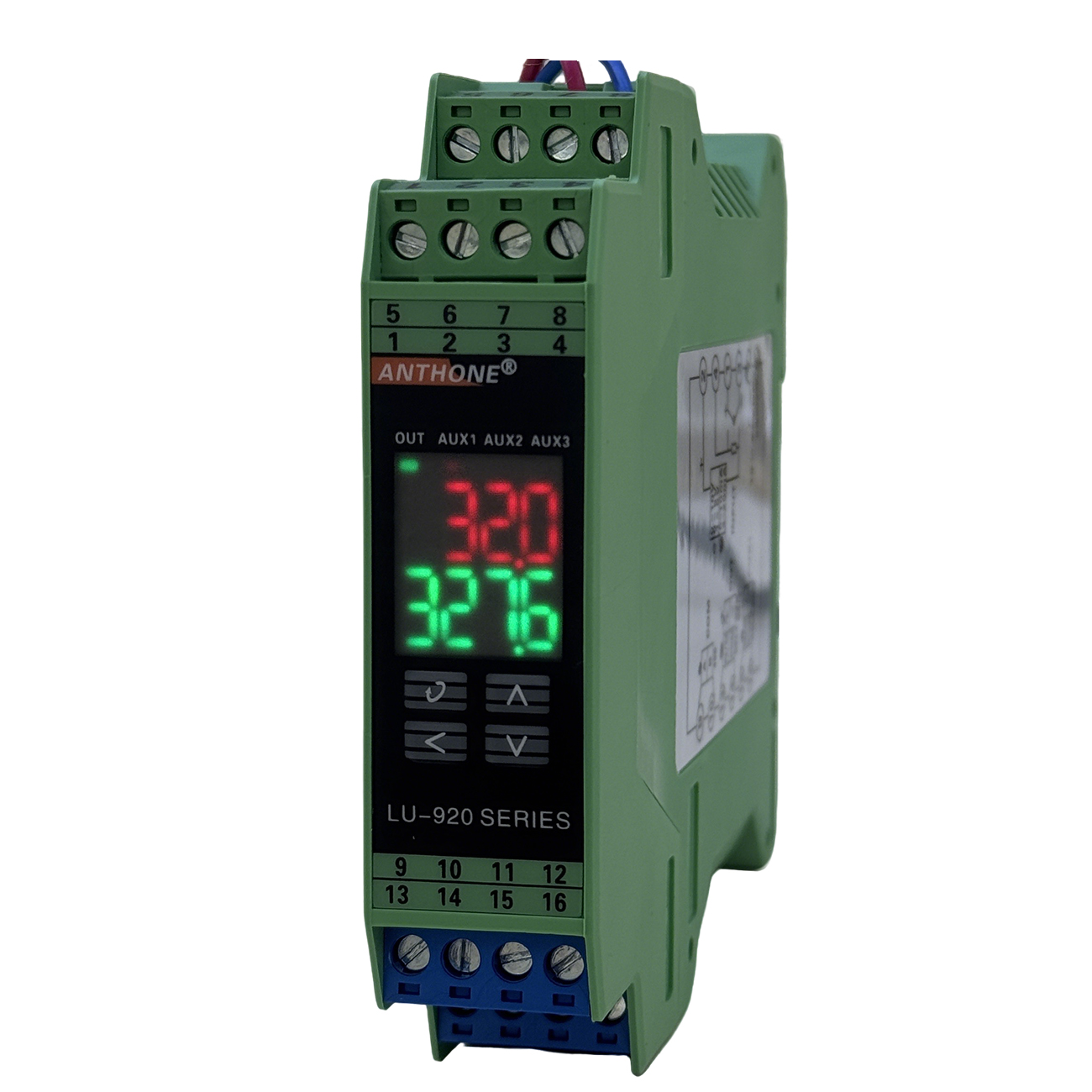
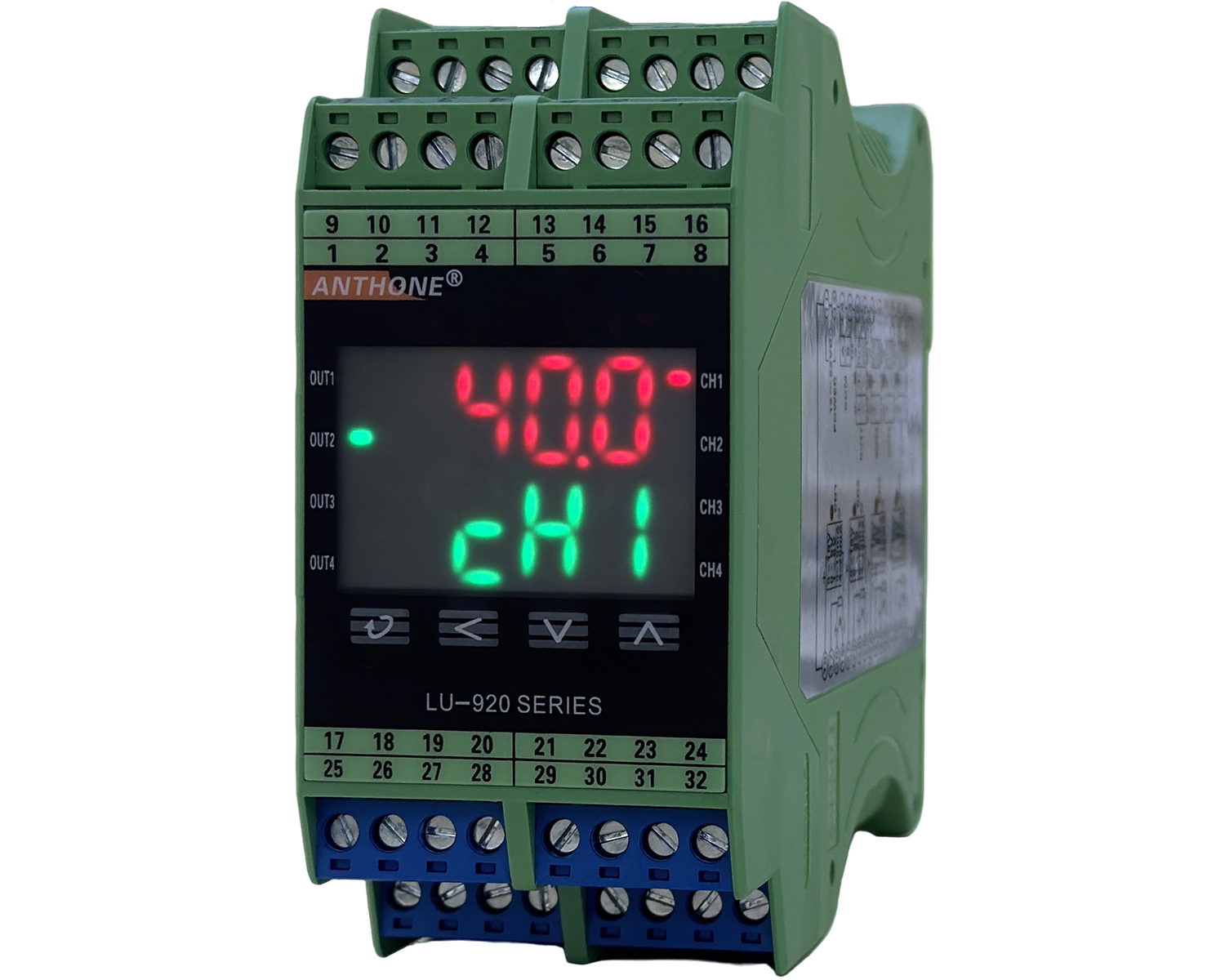
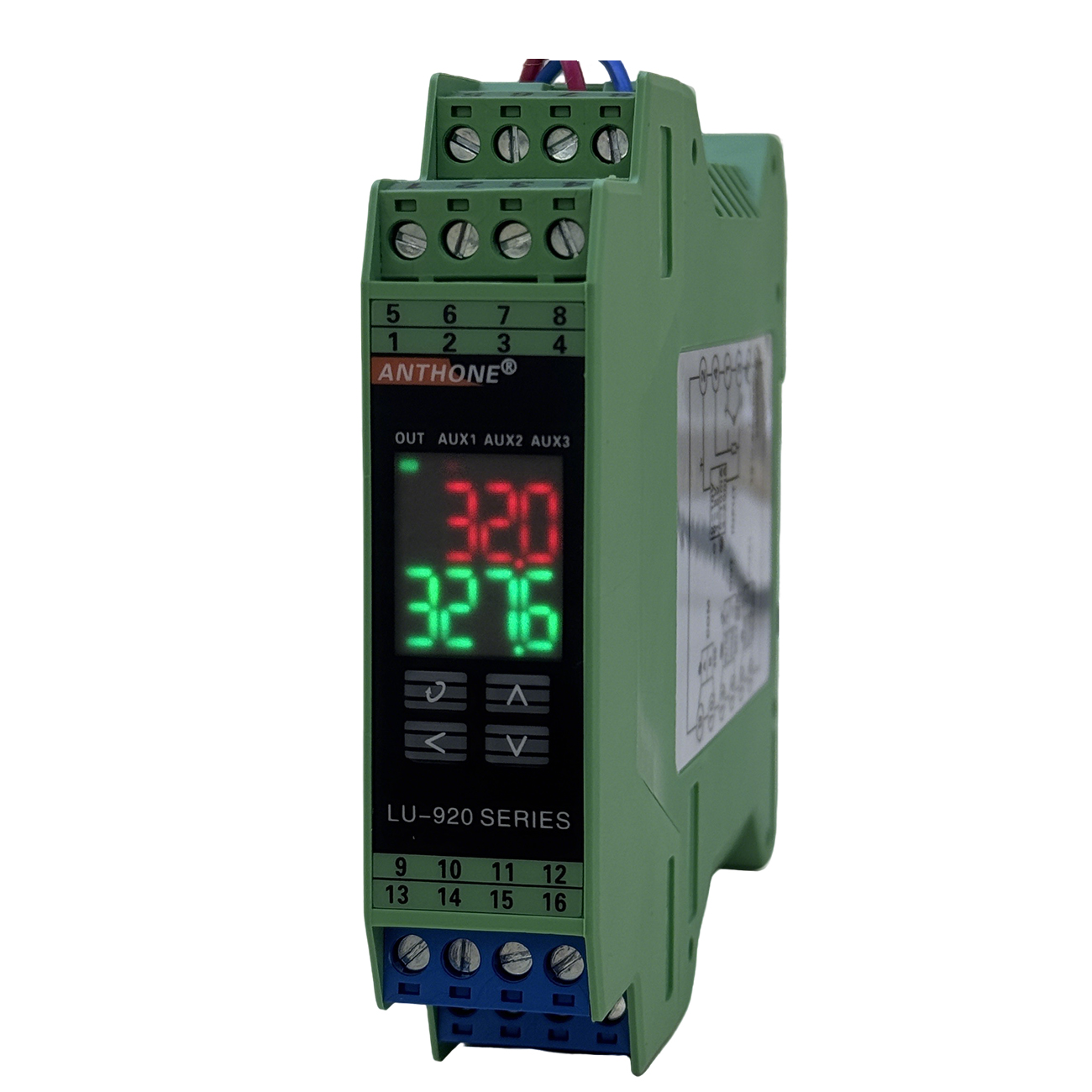
The LU-926MY memory-type PID control module is a high-performance, high-reliability intelligent industrial controller built on an entirely new design concept. It is designed for the regulation and control of temperature, flow, pressure and level in light industrial machinery, ovens, test equipment, refrigeration/heating equipment and similar applications. It is widely used in the semiconductor, photovoltaic, petroleum and chemical, ceramics, metallurgy, petrochemical and heat treatment industries.
Main features:
Equipped with an advanced ARM processor, it offers fast processing speed, simple interface circuitry, and high reliability and stability.
It covers signals from thermocouples and RTDs of all common graduation types as well as standard voltage and standard current signals; the fast and accurate nonlinear correction algorithm ensures the accuracy of digital sampling.
Multiple control modes are available for free selection. The smart control mode combines fuzzy theory with conventional PID control, giving the control process fast response, small overshoot and high steady-state accuracy. It is particularly effective for objects with large pure lag that are difficult to control with conventional PID. The control algorithm includes an auto-tuning function.
A unique control process memory function can store up to 1024 points of control process data, with two memory modes: PV and PV+MV. The memory interval is adjustable from 1 to 60 seconds. Users can browse the data quickly with one-key operation, and the memory data refreshes automatically according to the required browsing time. This function allows rapid analysis of control performance and facilitates control maintenance.
Comprehensive alarm outputs with 4 alarm registers that can be freely combined.
Dual-row 4-digit LED display for simple and easy human-machine interaction.
Plug-and-play modular structure with a wide range of output specifications to meet various application requirements.
Adopts the standard MODBUS communication protocol for high versatility and reliability.
Excellent immunity to interference; complies with the industrial level-3 EMC test requirements.
II Main technical specifications
□ Input specifications and range:
Thermocouple: S (-50~1768), R (-50~1768), B (250~1820), K (-200~1372), N (-200~1300),
E(-200~1000),J(-200~1200),T(-200~400)
RTD: PT100 (-200~800), Cu50 (-50~150), Cu100 (-50~150),
Standard millivolt signal: custom 0~100mV
Standard resistance signal: custom 0~500 ohm
Standard voltage signal: 0~10V, 0~5V, 1~5V, custom 0~10V
Standard current signal: 4~20mA, 0~10mA, custom 0~20mA
□ Measurement accuracy: class 0.2 (±0.2%FS ±1 digit)
□ Cold junction compensation: ±1°C □ Sampling resolution: 1°C or 0.1°C
□ Sampling period: 0.5 s □ Open thermocouple/open RTD and over-range detection, displays Sb
□ Control mode: on/off control, manual control, PID intelligent control with auto-tuning
□ Output mode: SSr solid-state relay trigger output (15VDC/30mA)
rELA normally open relay contact output (250VAC/0.8A)
i010 0~10mA current output (load capability <1000 ohm)
i420 4~20mA current output (load capability <500 ohm)
FrEE 0~20mA custom current, range set by software register
□ Alarm function: 4 alarm registers, freely assigned to each output position
9 selectable alarm modes (single-sided hysteresis high alarm, single-sided hysteresis low alarm, double-sided hysteresis high alarm, double-sided hysteresis low alarm, positive deviation alarm, negative deviation alarm, out-of-band positive/negative deviation alarm, in-band positive/negative deviation alarm, fault alarm)
□ Power supply: 20-52VDC or 85~265VAC □ Overall power consumption: less than 4W
□ Operating environment: temperature -10~+60°C, humidity 0~80%RH